Good food delivery packaging is packaging that gets a dish to the customer as it left your kitchen: sealed, upright, hot and cold apart, and every item in the bag. On Grab it is also money. In a merchant guide from Malaysia, Grab said that around 80% of refunds are caused by missing, incorrect or spilled items1, in a post last updated in April 20232. Each of those can come back to you as a refund, and complaints that repeat can put your store at risk, as the sections below show market by market. This guide covers every market where Grab runs food delivery: Singapore, Malaysia, Thailand, the Philippines, Vietnam and Indonesia.
Why does packaging cost you more than the box?
Because the box is the cheap part. The expensive part is the order that arrives spilled, opened or incomplete. Grab's Malaysian guide names drinks as the biggest culprit3. In Vietnam, Grab states that when it checks a complaint about a missing or wrong item and finds it valid, the refund is deducted automatically from the restaurant's revenue4. You see it as an adjustment in your revenue report.
Grab also measures it. In Thailand, the Safety and Quality report shows a Missing/Wrong Order Rate: the share of orders that had missing or wrong items, either partially or fully, compared with last month's rate5. Beside it sits a Defect Rate, the share of orders that experienced safety or quality issues6. Both move, among other things, with the way your team packs.
What to do: open your Safety and Quality report, or your refund and adjustment lines, and write down how many orders last month came back with a missing, wrong or spilled item. That number is what better packaging can bring down.
What happens when complaints keep coming?
Grab escalates. Malaysia's Merchant Food Safety and Quality Framework lists damaged packaging among the incidents that lead to strikes, described as cracks, leaks, or improper packaging causing spillage7. Depending on how serious the incident is, a restaurant may receive up to three reminders before further action such as a fine or a temporary store suspension8, and one of the listed actions is a fine of RM1509.
Indonesia describes the same climb for food quality complaints. A second valid report brings a written warning and a three day suspension10. A third brings a six day suspension and a review of the partnership11.
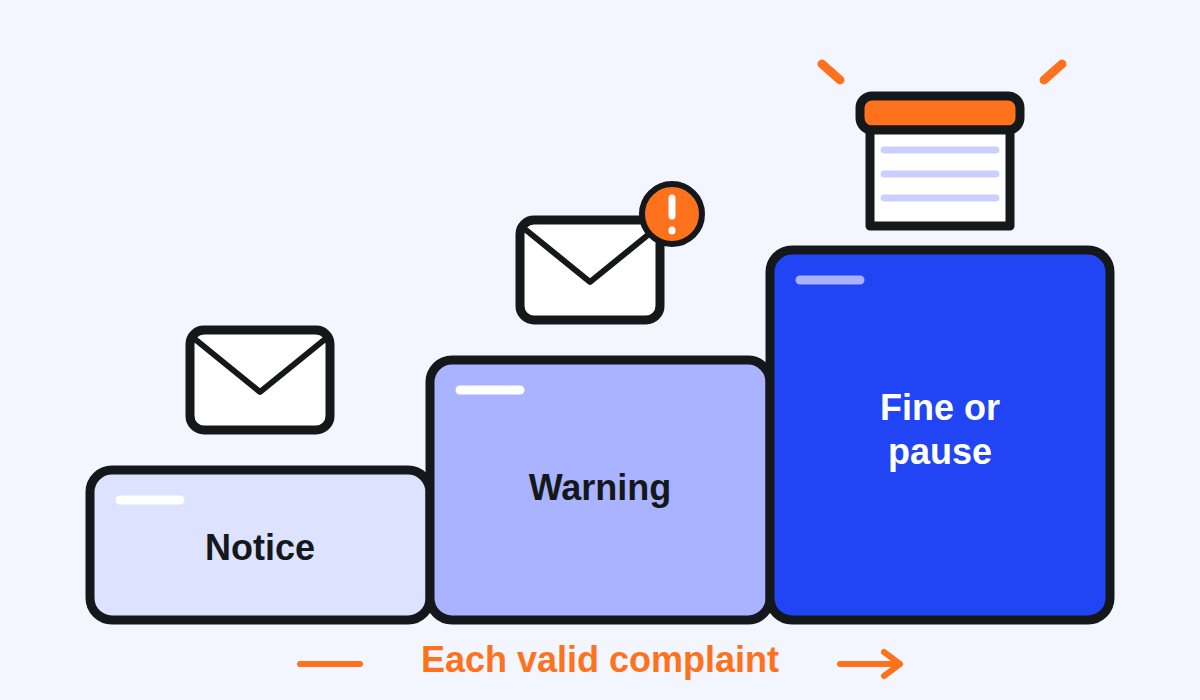
None of this is meant to catch you out. Each step gives you a chance to fix the cause. The cheapest place to fix it is the packing counter.
What does Grab ask of your packaging?
Grab's help centre in the Philippines spells it out more fully than any other market, and the advice is sound in every market:
- Use sturdy, spill-proof containers and seal them properly12.
- Pack hot and cold items separately to keep their quality during delivery13.
- Add padding or dividers so items do not shift during the ride14.
- Use tamper-proof packaging to protect the food15.
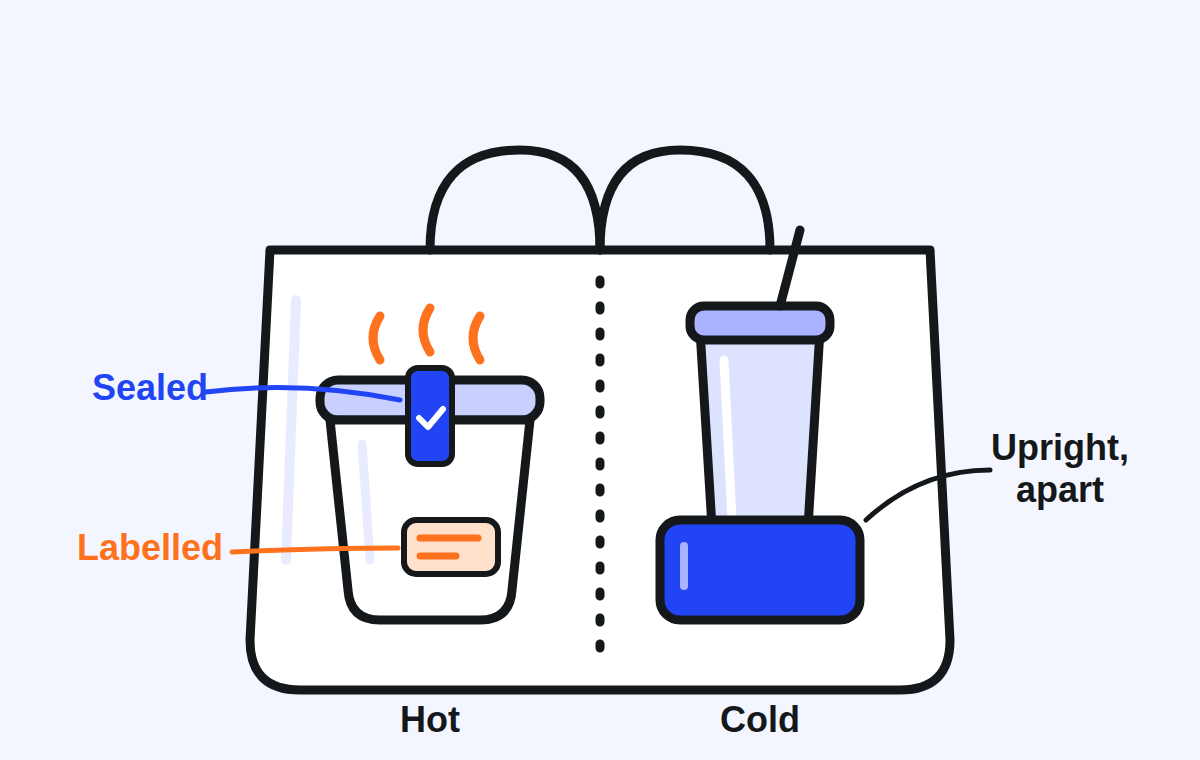
Think of the ride as part of the recipe. A trade article on delivery packaging points out that food may now travel further, meet more handling points and spend longer in transit16. It also warns that ventilation must release steam without letting the food go cold17. A crisp dish in a closed box steams itself soft. A soup in a lid that only presses on will find its way out at the first bump.
How do you choose a container for each dish?
By testing it, dish by dish. A tableware manufacturer's guide describes heat and leak tests per dish type, such as noodle broth, oily stir-fry, rice curries and sauced proteins18, and recommends running them with actual dishes while collecting complaint data19. It is a supplier's view, but the method is sound and costs almost nothing.
What to do this week: order your three best sellers to an address a twenty minute ride away, or ask a rider you know to carry them around the block. Open them as a customer would. Look for a soggy crust, a leaked sauce, a cold centre, a lid that moved. Change one thing at a time: a vented lid for fried food, a sealed lid and a bag for soups, sauces in their own pot.
One thing to leave out: staples. Indonesia's food quality guide lists sharp metal such as nails, staples and needles among the foreign objects that count as contamination20. A seal sticker does the same job without the risk.
How do you stop missing and wrong items?
A missing item is a packing problem, not a cooking one. Grab's Philippine help centre gives three habits:
- Label items clearly, especially on orders with several dishes21.
- Before handing over the order, check every item against the receipt or the order details22.
- Teach your staff to handle food carefully and pack orders with care23.
Make the check one person's job at the busiest hours. A second pair of eyes at the counter is cheaper than a refund.
Do you have to include cutlery?
Not always. In Malaysia and the Philippines, customers can choose whether to receive single-use plastic cutlery24. When the order note says the customer does not need it, do not include forks, spoons or knives, and note that straws are not part of this request25. If the note says nothing about cutlery, provide it as usual26. Tell the whole team, because the note is easy to miss at rush hour. In the other markets, read the customer's note on each order the same way.
Can you charge for packaging?
In some markets, and only on Grab's terms. In Indonesia, the packaging fee (biaya kemasan) is a charge to the GrabFood customer so that you can pack the order safely and properly27. In Jakarta, Bogor, Depok, Tangerang and Bekasi28 it is tied to Grab's Green Merchant Program: a flat fee of up to Rp3,000 for a store that has not yet moved to greener packaging, and up to Rp7,000 for a store in the Green Merchant Program29, or a fee that follows the order's value, of up to 3% and up to 10% of the purchase respectively30. The greener your packaging, the higher the fee Grab may allow31. The fee counts in your gross revenue, and Grab asks that it not be used to raise your margin32.
In Singapore, Grab says you may charge customers for non-reusable packaging such as bagasse33, and recommends no more than $0.30 per unit, to cover costs while keeping customers' expectations in mind34. If you forget to use the packaging you charged for, Grab asks you to call the customer, explain, and refund the cost35.
The other markets' help centres do not publish a packaging fee. If you want to charge one, ask Grab first.
Does eco-friendly packaging help you on Grab?
In Singapore, it can make your store more visible. Grab says a merchant using one of its partner eco-packaging options gains increased in-app visibility with an "Eco-friendly" label36. It also says that forty-three percent of consumers are willing to pay more to go green37; Grab does not say where that figure comes from. Eco-friendly does not have to mean leaky: Grab notes that compostable options such as PLA-lined containers are leak-proof too38, and suggests starting with best sellers and fast-moving items that travel well39.
Whatever the material, run the same ride test before you switch a whole menu.
What if a complaint is wrong?
You can contest it. In Malaysia, a restaurant that believes a complaint is invalid can submit an appeal40, and has three working days to answer a notification41. In Vietnam, a restaurant asking for a review is asked to provide evidence, including photos and/or videos42.
That makes one habit worth having: a quick photo of each sealed bag, with its order number visible, before the rider takes it. It takes seconds, and it is the kind of evidence a review asks for.
What should you check this week?
- Your missing, wrong and spilled orders last month, in your report or your refund lines.
- One ride test of your three best sellers, and one change for the worst traveller.
- Hot and cold apart, drinks upright and sealed, every container closed without staples.
- A label on each item of a multi-dish order, and one person who checks the bag against the receipt.
- The cutlery note on each order.
- A photo of each sealed bag before handover.
- The one and two star reviews that mention a spill, a leak or a missing item, each answered with what you changed.
Grab puts it simply: fulfilled orders mean happy customers, and happy customers are more likely to order again43. Kontimo helps people running restaurants on Grab read their reviews and complaints each month, explained in plain language, so the next fix at the packing counter is the right one.