Grab Quality Hero is Grab's monthly programme for restaurants on GrabFood: Grab measures how reliably your store serves its orders over a calendar month, and a store that meets the bars gets a badge and other benefits the following month. In the Philippines, a Quality Hero merchant receives a badge pinned to its listing and a place in a Quality Picks feed card on the Grab app's homepage1. The programme carries a different name in some markets, and the bars and rewards differ from one market to the next. This guide covers all six: Singapore, Malaysia, Thailand, the Philippines, Vietnam and Indonesia.
What is the programme called in your market?
- Singapore and Malaysia: Top Service. Grab Singapore says Top Service was previously known as the Quality Hero Programme2, and launched it on 6 April 20263. Malaysia made the same change4.
- Thailand: Quality Hero, in Thai ร้านดีการันตีคุณภาพ5. Grab Thailand moved it to three tiers, Gold, Silver and Bronze6, from 5 March 20267.
- The Philippines: Quality Hero, one level, as described above.
- Vietnam: Tạp Dề Vàng (the Golden Apron), which Grab presents as the way to become a standout store on GrabFood8.
- Indonesia: Grab Bintang Lima, a collection of Grab's best restaurants that keep their performance up9. Grab Indonesia's help centre does not publish bars for it.
Whatever the name, the logic is the same: Grab looks at one month, and your standing for the next month depends on it10.
What does Grab measure?
The same handful of figures in every market, each one something your team controls:
- Store completion score: how complete your store's information is, scored out of 100 in Singapore11.
- Ratings: your lifetime rating and how many ratings you have.
- Completed orders in the month.
- Safety incidents: none allowed at any tier12.
- Avoidable cancellations: orders your store cancels.
- Missing or wrong items (Grab Singapore calls it the MIWI rate).
- Offline rate: the time your store was paused compared with its operating hours13.
- Order delay rate: Grab Singapore counts an order on time when it is ready within its preparation time and handed to the driver within 3 minutes of their arrival at your store14.
What are the bars in each market?
These are the bars Grab publishes today. They change, so check the programme screen in your GrabMerchant app before you plan around them.
Thailand, from Bronze to Silver to Gold: at least 1, 30 and 200 completed orders15; Silver asks at least 10 ratings16 at 4 stars and Gold at least 200 ratings at 4.7 stars17; order delay below 50%, 25% and 10%18; offline rate below 30%, 15% and 10%19; incorrect orders below 20%, 1% and 1%20; and a store completion score of at least 50%, 70% and 80%21.
The Philippines, one level. To enter: a lifetime rating above 4.0 with at least 10 ratings22, a store completion score above 70%23 and zero safety incidents or ongoing investigations24. Then, every month: at least 20 orders25, avoidable cancellations under 1%26, order delay under 27%27, under 1% of orders with missing or wrong items28, and an offline rate under 5%29.
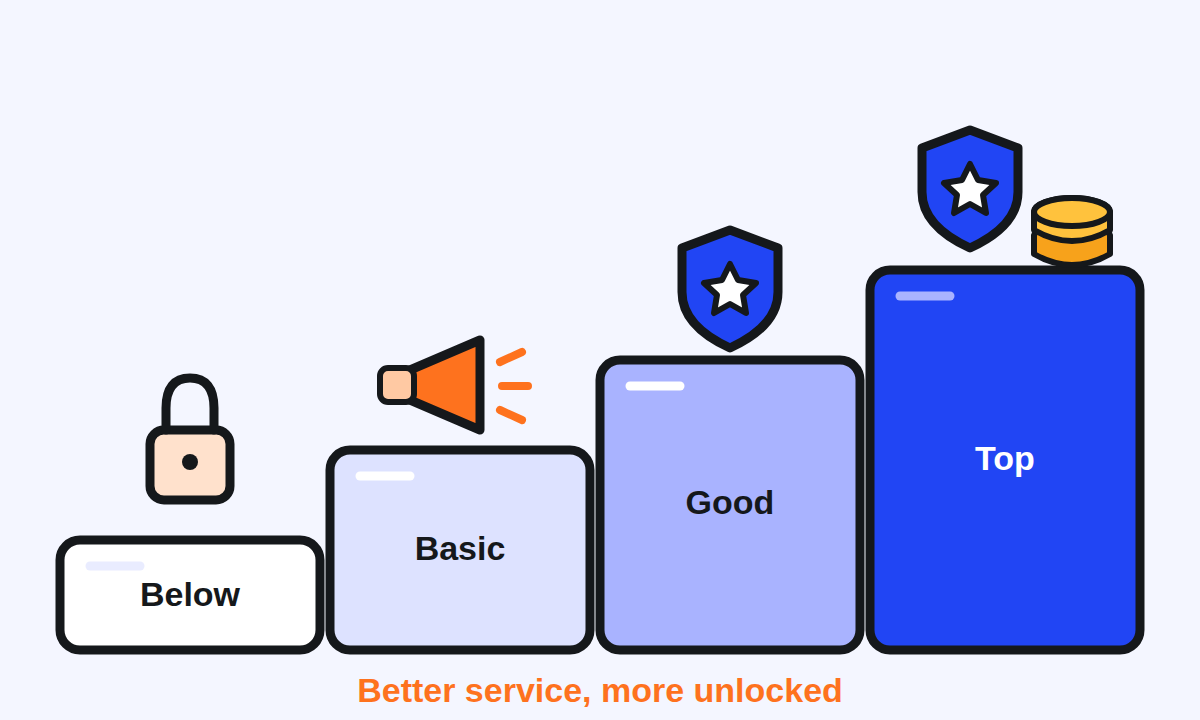
Singapore, from Tier 3 to Tier 2 to Tier 1: at least 1, 20 and 100 completed orders a month30; missing or wrong items at most 2.5%, 1.0% and 0.8%31; offline rate 30%, 5% and 2%32; order delay 25%, 20% and 8%33; avoidable cancellations 1.5%, 1.0% and 0.5%34. Singapore's top tier asks for the lowest offline, delay and cancellation rates of the six markets.
Malaysia, from Tier 3 to Tier 1: at least 1, 30 and 150 completed orders35; a lifetime rating of 4 for Tier 2 and 4.5 for Tier 136; order delay 30%, 20% and 10%37; offline rate 30%, 15% and 10%38.
Vietnam, one level: a rating of at least 4.239, then at least 60 completed orders in the month40, order delay under 25%41 and under 1% of orders with wrong or missing items42.
Indonesia: no bars are published in Grab's help centre. Ask your account manager what Grab Bintang Lima looks at.
What does a tier give you?
The rewards differ by market, and they are worth having:
- Thailand: joining campaigns in which Grab helps fund the customer's discount43, an extra promotion discount from Grab shown in three places, among them under your store's name on the home page44, and a chance to become a #GrabThumbsUp merchant45.
- Singapore: ad credits when you first reach Tier 1 or Tier 246, and a "Top Service" badge on your store card and menu page47.
- Malaysia: badges, and possibly more visibility through special placements such as Best in Service Quality sections48.
- The Philippines: the badge and the Quality Picks feed card1.
- Vietnam: the Tạp Dề Vàng badge, shown from the 4th of the following month49.
- Indonesia: a place in the Grab Bintang Lima collection, and while stocks last, free merchandise such as a plaque, food seals and greeting cards50.
What happens below the lowest tier?
You lose access, not just a badge. In Thailand, a store below Bronze cannot become #GrabThumbsUp51, cannot receive the Quality Hero promo code52, and is blocked from certain special campaigns53. In Singapore, Tier 4 is excluded from free ad credit programmes54 and blocked from co-funded campaigns55. Grab Singapore also says Tier 4 holds 30% to 40% of merchants56, so falling below the floor is common.
A single serious event can matter too. In the Philippines, a store can lose its incentives before the month ends if a safety incident is reported57.
How does the monthly cycle work?
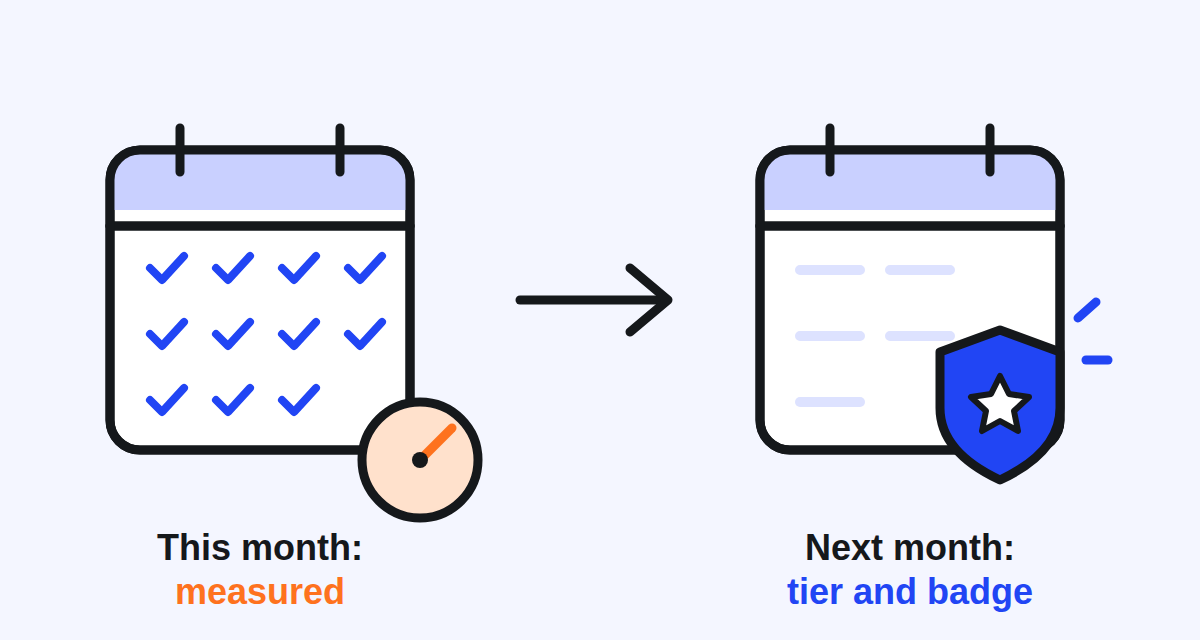
Each month is measured from its first day to its last58. The result sets your tier or your status for the following month, and the benefits arrive early in that month: in the Philippines, from the first to the second week59, and in Vietnam from the 4th. A bad week early in the month weighs on the whole month, and a strong month pays off only from the next.
Do you have to sign up?
It depends on the market. In Singapore the programme is free60, and in Malaysia every GrabFood merchant is enrolled automatically61. In the Philippines, all GrabFood merchants can join62. In Thailand, the help centre says the programme is available to selected merchants only63: ask your account manager if you do not see it in your app.
How do you move up a tier?
Grab gives its own advice, and it starts with the two figures that trip up busy kitchens:
- Do not pause the store to cope with a rush. Pausing raises your offline rate. Grab recommends turning on Busy Mode instead64, to slow new orders while you clear the backlog and avoid delays65.
- Adjust the preparation time early. Grab asks you to edit the order preparation time within 3 minutes of receiving the order66, so a large order is not counted as late.
- Keep your opening hours up to date on Grab67, and use the sales limit feature for dishes that run out68, so you do not cancel orders you cannot serve.
- Double-check orders for missing or wrong items69 before handing them over.
- Complete your store profile and look after your ratings: both are bars in every market that publishes its bars.
Start with the figure furthest from the next tier. One metric missed is enough to stay where you are.
What if one of your figures is wrong?
Some can be appealed, some cannot. Store completion, orders, avoidable cancellations, offline rate and order delay are calculated from your store's own transactions, and Grab Singapore says no appeal is available for them70. A safety incident can be appealed in the GrabMerchant app under Feedback, Incident, within 7 days in Singapore71. A missing or wrong item complaint is appealed in the same place72. Grab takes 4 working days to review an appeal73.
What should you check this month?
- The programme screen in your GrabMerchant app: your tier, and the figure furthest from the next one.
- Your offline rate: how often you paused, and whether Busy Mode would have done.
- Your order delay rate, and whether your team edits the preparation time on large orders.
- Your missing or wrong items, and the appeals worth making.
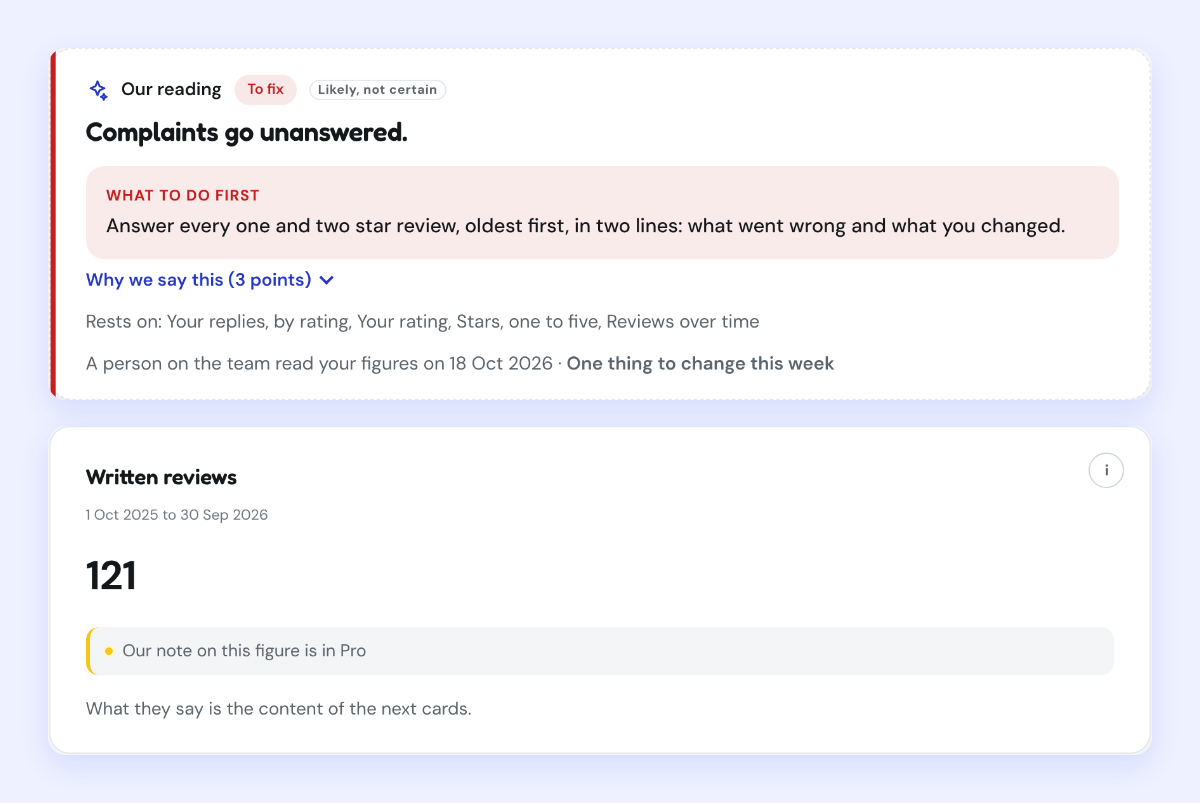
- Your rating, and the reviews still waiting for an answer.
- Your badge as customers see it: Grab suggests asking a friend to check your store in the Grab app74.
Kontimo helps people running restaurants on Grab read these figures each month, explained in plain language, so the next step up is the one you work on.